Rodolphe Saade and Greg Hayes: Careers, Leadership, Business Influence, and the Facts Behind Their Connection

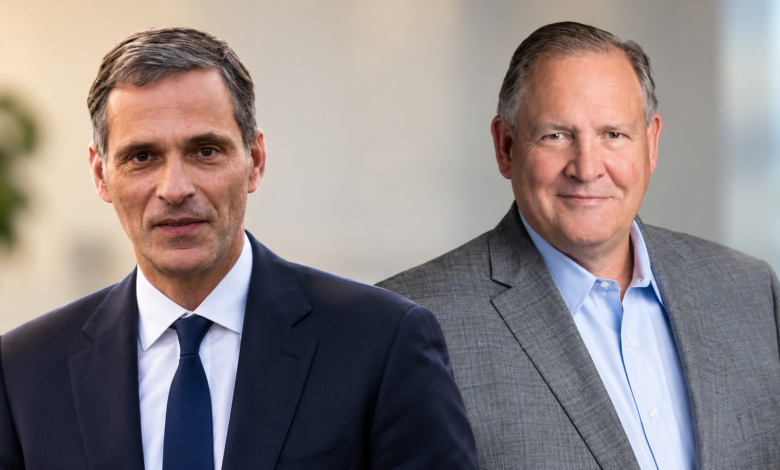
The names Rodolphe Saadé and Greg Hayes represent two distinct paths to leadership in the global business world. Both executives have held influential positions in major international companies, navigated complex commercial environments, and helped shape the strategies of organizations operating across national borders. However, their professional backgrounds, industries, and approaches to corporate leadership differ considerably.
Rodolphe Saadé is best known for leading CMA CGM, a major international shipping, transportation, and logistics group founded by his father, Jacques Saadé. Greg Hayes, whose full name is Gregory J. Hayes, is known for his long career in the aerospace and defense sector, particularly his leadership at United Technologies Corporation and RTX, formerly known as Raytheon Technologies.
People searching for Rodolphe Saadé and Greg Hayes may be looking for information about their careers, business interests, professional relationship, or influence on international commerce. Understanding the facts requires looking at each executive’s documented career rather than assuming that two prominent business figures necessarily share a direct connection.
The key distinction is that their professional histories are centered on different companies and industries. Saadé’s leadership is associated with shipping and integrated logistics, while Hayes built his reputation through aerospace, industrial management, financial strategy, and corporate restructuring. Publicly available corporate biographies establish these separate career paths, but they do not, by themselves, establish a direct personal relationship or business partnership between the two men.
This article examines their backgrounds, achievements, leadership approaches, and the broader business environment in which their careers developed. It also explains what can and cannot responsibly be concluded about a possible connection between them.
Who Are Rodolphe Saadé and Greg Hayes?
Although both names are associated with senior corporate leadership, the executives have different professional specializations and career histories.
Rodolphe Saadé has spent much of his career in maritime transportation, international trade, and logistics. Greg Hayes spent decades in industrial management and aerospace, eventually becoming a central figure in the formation and development of RTX.
Their careers offer useful examples of how executive leadership can take different forms depending on a company’s industry, ownership structure, competitive environment, and long-term objectives.
Rodolphe Saadé: The Leader of CMA CGM
Rodolphe Saadé is the chairman and chief executive officer of the CMA CGM Group. Born in Lebanon in 1970, he studied business and marketing at Concordia University in Montreal before beginning his professional career as an entrepreneur.
According to CMA CGM’s official biography, Saadé founded a water-dispenser business before joining his family’s shipping company in 1994. He subsequently worked across several shipping operations and international markets, developing practical experience in the industry before moving into senior management.
His career progressed through operational responsibilities, financial restructuring, acquisitions, and international expansion. He became chairman and chief executive officer of CMA CGM in November 2017.
His position places him at the center of a business that helps transport goods between countries and supports the wider international supply chain. CMA CGM’s activities extend beyond ocean freight into logistics and other transportation services, making its strategic decisions relevant to manufacturers, retailers, importers, and exporters.
Greg Hayes: The Aerospace and Industrial Executive
Greg Hayes built his career in a different part of the global economy. He held senior financial and executive positions at United Technologies Corporation before becoming its chief executive officer in 2014 and chairman in 2016.
His responsibilities expanded significantly when United Technologies’ remaining aerospace businesses combined with Raytheon Company in 2020 to create RTX. Hayes became chairman and chief executive officer of the newly formed company and subsequently served as executive chairman.
In 2024, Christopher T. Calio succeeded Hayes as RTX’s chief executive officer. Hayes stepped down as executive chairman and left the company’s board in April 2025, subsequently serving as a special adviser during the transition. His advisory role was scheduled to continue through January 2, 2026.
Hayes’s career is notable for its emphasis on financial management, business portfolio decisions, mergers, acquisitions, and organizational transformation. His experience illustrates the challenges of leading a large industrial organization whose products serve commercial aviation, defense, and other technically demanding markets.
Rodolphe Saadé and Greg Hayes: A Comparison of Their Careers

Comparing these executives helps explain why their names may appear in discussions of international business even though their professional backgrounds are different.
| Category | Rodolphe Saadé | Greg Hayes |
|---|---|---|
| Main industry | Shipping, transportation, and logistics | Aerospace, defense, and industrial management |
| Best-known company | CMA CGM | United Technologies Corporation and RTX |
| Professional background | Entrepreneurship, shipping operations, and family-business leadership | Finance, industrial management, and corporate strategy |
| Leadership focus | International transportation networks and logistics expansion | Business restructuring, aerospace operations, and corporate integration |
| Major leadership milestone | Became chairman and CEO of CMA CGM in 2017 | Became CEO of United Technologies in 2014 and led RTX after its formation in 2020 |
| Ownership context | Leads a family-founded business | Led major publicly traded industrial corporations |
| Documented career connection between the two | No direct relationship established by the cited corporate biographies | No direct relationship established by the cited corporate biographies |
These differences are important because the phrase Rodolphe Saadé and Greg Hayes does not automatically describe a joint venture, shared employer, or formal business relationship. It identifies two executives whose work can be examined comparatively, but any claim that they collaborated would require additional evidence.
Rodolphe Saadé’s Career and Business Achievements
To understand Saadé’s influence, it helps to examine how he moved from operational management into a broader leadership role at one of the world’s major shipping and logistics businesses.
From Entrepreneurship to International Shipping
Saadé did not immediately enter the family business after completing his education. He first established a water-dispenser company before joining CMA CGM in 1994. He then gained experience in different markets, including the United States, Hong Kong, and international shipping operations.
This background matters because shipping is not simply a matter of owning vessels. It involves coordinating schedules, managing commercial relationships, understanding freight demand, controlling costs, and responding to changing trade patterns.
Saadé’s operational experience provided a foundation for his later responsibilities. In 2010, he became vice chairman and a member of the company’s board of directors. He also oversaw a financial restructuring that year.
Expanding Beyond Traditional Shipping
One of the defining features of Saadé’s leadership has been the effort to develop services beyond ocean freight.
A container shipping company connects ports, but customers often need more than transportation between two destinations. They may require warehousing, customs coordination, inland delivery, air cargo, and supply-chain management.
CMA CGM’s acquisitions and investments reflect an effort to address these broader needs. Notable developments include:
- Neptune Orient Lines: Saadé led the company’s successful public tender offer for the Singapore-based shipping group in 2015 and 2016.
- CEVA Logistics: CMA CGM completed a public tender offer for the logistics company in 2019.
- Air cargo: In 2021, the group announced the establishment of CMA CGM AIR CARGO.
- Additional logistics capabilities: Acquisitions in 2022 included Ingram CLS, GEFCO, and Colis Privé, strengthening different parts of its logistics network.
These developments are documented in CMA CGM’s official executive biography. They demonstrate a strategic emphasis on offering customers more connected transportation and logistics services rather than relying exclusively on shipping.
Sustainability and Long-Term Planning
Shipping companies face growing pressure to improve fuel efficiency, reduce emissions, and respond to environmental regulation. Saadé’s leadership has included investments in alternative-fuel vessels and a stated ambition for CMA CGM to reach net-zero carbon emissions by 2050.
Such commitments should be understood as long-term objectives rather than proof that all operations are already carbon-neutral. The transition depends on vessel technology, fuel availability, infrastructure, operating practices, and developments across the maritime industry.
For readers interested in Saadé’s business strategy, this is an important distinction: corporate targets explain a company’s intended direction, while independently verified performance data is needed to measure the results.
Greg Hayes’s Career and Corporate Leadership
Greg Hayes’s professional story offers a different perspective on how large businesses evolve. His work centered on industrial management, financial discipline, portfolio restructuring, and the consolidation of aerospace operations.
Building a Career at United Technologies
Hayes joined United Technologies Corporation through its merger with Sundstrand Corporation in 1999. Over time, he held positions involving finance, strategy, and business development.
He became chief financial officer in 2008 and remained in that role until 2014, when he was appointed chief executive officer. He became chairman in 2016.
This progression illustrates how senior financial experience can lead to broader corporate responsibilities. A chief financial officer must understand profitability, investment priorities, cash flow, risk, and capital allocation. Those skills can become especially valuable when a company is considering acquisitions, divestitures, or major organizational changes.
Reshaping a Major Industrial Business
One of the most consequential parts of Hayes’s tenure involved restructuring United Technologies and narrowing its focus.
During his leadership, the company divested Sikorsky Aircraft in 2015 and acquired Rockwell Collins in 2018. In 2020, its Otis and Carrier businesses were separated into independent companies.
That same year, United Technologies’ remaining aerospace businesses, including Pratt & Whitney and Collins Aerospace, combined with Raytheon Company to form RTX.
The changes significantly altered the company’s structure. Instead of continuing as the same broad industrial conglomerate, the organization concentrated its remaining operations around aerospace and defense.
The Formation of RTX
The creation of RTX was a major corporate transaction that brought together businesses with established positions in aviation technology, aircraft engines, aerospace systems, and defense.
The merger created opportunities to combine capabilities, coordinate investment, and serve customers across related markets. At the same time, large mergers require complex integration work, including aligning management systems, technology platforms, supply chains, and corporate cultures.
Hayes became chief executive officer of RTX when the combination was completed in 2020. Christopher Calio succeeded him as CEO in May 2024, while Hayes continued as executive chairman until April 2025. RTX announced the leadership transition in February 2025.
His departure from the company’s executive leadership is an important part of an accurate biography. Hayes’s historical role at RTX should not be confused with the company’s current leadership.
Is There a Direct Connection Between Rodolphe Saadé and Greg Hayes?
This is the central question for readers searching the phrase Rodolphe Saadé and Greg Hayes.
Based on the official corporate biographies, governance information, and leadership announcements reviewed for this article, there is no verified direct business partnership or personal relationship established between the two executives.
That finding needs to be expressed carefully. A lack of documented evidence in the sources reviewed does not prove that the men have never met, communicated, or encountered one another through wider business circles. It means that a specific relationship should not be presented as fact without reliable supporting evidence.
Do They Work for the Same Company?
No. Their documented executive careers are associated with different organizations.
Saadé leads CMA CGM, a transportation and logistics group. Hayes’s best-known executive roles were at United Technologies Corporation and RTX. RTX’s official leadership information identifies Christopher Calio as its chairman and chief executive officer, following the leadership transition in 2025.
Have They Announced a Joint Venture?
The official company materials reviewed for this article do not establish a joint venture between Saadé and Hayes.
CMA CGM has pursued acquisitions, shipping alliances, and logistics partnerships, while Hayes’s corporate career included mergers and business restructuring in the aerospace sector. Those separate activities are not evidence of a joint project between the two men.
Any future claim about a specific agreement would need to be checked against company announcements, regulatory filings, or credible reporting.
Why Might People Search for Both Names?
There are several reasonable explanations for a search that combines two executives’ names.
First, both are associated with large international companies and consequential strategic decisions. Second, shipping, aviation, manufacturing, and defense all operate within the wider global economy. Third, readers researching business leaders may compare their careers to understand differences in executive strategy.
These are plausible explanations for the search interest, not verified explanations of why any particular person entered the query.
The most responsible approach is to separate what is documented from what is merely possible. Rodolphe Saadé and Greg Hayes can be compared as business leaders without inventing a shared history.
What Their Industries Have in Common
Although the executives’ career paths are distinct, their industries operate within a connected economic system.
International Supply Chains
Shipping and aerospace manufacturing both depend on complex supply networks. Companies need raw materials, specialized components, transportation services, inventory management, and reliable delivery schedules.
CMA CGM operates in the movement and coordination of freight. Aerospace companies such as those associated with RTX depend on sophisticated manufacturing networks and the movement of components, equipment, and finished products.
This creates an economic connection between the sectors, but it does not establish a direct relationship between individual executives.
Technology and Operational Efficiency
Both sectors face pressure to improve efficiency through technology.
In shipping, digital tools can support cargo tracking, route planning, customer communication, and the coordination of freight movements. In aerospace, innovation involves engineering, manufacturing precision, aircraft systems, and the development of increasingly capable technologies.
The technical requirements are different, but both industries reward organizations that can manage complex operations while maintaining reliability and controlling costs.
Risk Management
Risk is another shared concern.
Shipping companies must contend with port congestion, changing trade routes, fuel costs, weather, geopolitical disruption, and fluctuations in freight demand. Aerospace and defense businesses face their own challenges, including manufacturing complexity, long development cycles, regulatory requirements, and customer demands.
Executives in both environments must make decisions with long-term consequences while adapting to changing market conditions.
The useful comparison is therefore about the business challenges their industries share—not an assumption that Saadé and Hayes personally worked together.
Leadership Lessons From Rodolphe Saadé and Greg Hayes
The careers of Rodolphe Saadé and Greg Hayes offer several lessons for readers interested in business leadership, corporate strategy, and international markets.
1. Industry Knowledge Matters
Saadé developed experience in shipping operations before taking on the highest leadership position at CMA CGM. Hayes progressed through financial and strategic roles before becoming chief executive of United Technologies.
Their backgrounds demonstrate the value of understanding how a business operates. Executive leadership requires more than making high-level decisions; it also involves understanding the operational realities that determine whether a strategy can succeed.
2. Growth Requires Strategic Choices
Saadé’s leadership has included acquisitions and expansion into logistics and air cargo. Hayes’s tenure included divestitures, acquisitions, and the formation of RTX.
These approaches were not identical, but both involved deciding where businesses should invest, which activities should receive greater attention, and how corporate structures could better serve long-term objectives.
Growth does not always mean adding more businesses. In some circumstances, expanding into related markets makes sense. In others, separating business units or concentrating on core capabilities can be more effective.
3. Leadership Changes Do Not End a Company’s Development
The transition from one executive to another is a normal part of corporate governance.
Saadé continues to lead CMA CGM, while Hayes’s executive leadership at RTX concluded through a transition to Christopher Calio. The two examples illustrate different stages of corporate leadership: continuing to direct an expanding business and transferring responsibility after a period of organizational transformation.
Neither situation should be judged solely by the prominence of the executive. A company’s long-term performance also depends on its employees, management systems, customers, financial position, and ability to adapt.
4. Reliable Information Is Essential
Business leaders frequently attract attention because of their companies’ size, acquisitions, or influence. However, online articles sometimes turn similarities between executives into unsupported claims about partnerships or personal relationships.
A reliable business biography should distinguish confirmed appointments, acquisitions, and company announcements from speculation. That principle is particularly important when discussing Rodolphe Saadé and Greg Hayes, because the available evidence supports a comparison of their careers but does not establish a direct partnership.
Frequently Asked Questions
1. Who are Rodolphe Saadé and Greg Hayes?
Rodolphe Saadé is the chairman and chief executive officer of CMA CGM, an international shipping and logistics group. Greg Hayes, formally Gregory J. Hayes, is a former chief executive officer and executive chairman of RTX who previously held senior leadership positions at United Technologies Corporation.
Their careers are associated with different industries and companies.
2. Are Rodolphe Saadé and Greg Hayes business partners?
No direct business partnership between the two has been established by the official corporate sources reviewed for this article. Their documented careers center on separate organizations. A claim of collaboration would require specific supporting evidence.
3. What company does Rodolphe Saadé lead?
Rodolphe Saadé leads CMA CGM, a group active in maritime shipping, transportation, and logistics. The business has expanded into related areas, including logistics services and air cargo. Saadé became chairman and CEO in 2017.
4. What is Greg Hayes best known for?
Greg Hayes is best known for his executive leadership at United Technologies Corporation and RTX. His career included financial management, corporate restructuring, acquisitions, and the 2020 combination of United Technologies’ remaining aerospace businesses with Raytheon Company.
He stepped down as RTX’s executive chairman in April 2025.
5. Are Rodolphe Saadé and Greg Hayes in the same industry?
Not primarily. Saadé’s work focuses on shipping and logistics, whereas Hayes’s executive career focused on aerospace, defense, and industrial management.
Their industries can overlap through international supply chains and transportation infrastructure, but this does not establish a direct professional relationship.
6. Why are Rodolphe Saadé and Greg Hayes mentioned together online?
The combined search may reflect an interest in comparing prominent executives, researching corporate leadership, or exploring the relationship between different sectors of the global economy. The precise reason for the search cannot be confirmed without additional evidence.
7. What are Rodolphe Saadé’s major business achievements?
Documented milestones include his leadership of CMA CGM’s acquisition of Neptune Orient Lines, the group’s acquisition of CEVA Logistics, the establishment of its air cargo division, and its expansion into additional logistics services. These developments reflect a strategy of broadening the group’s transportation and supply-chain capabilities.
CMA CGM Group
+1
8. What were Greg Hayes’s most significant corporate decisions?
Important milestones include the divestiture of Sikorsky Aircraft, the acquisition of Rockwell Collins, the separation of Otis and Carrier, and the formation of RTX through the combination of United Technologies’ remaining aerospace businesses with Raytheon Company.
9. Are their personal lives or family relationships connected?
The corporate biographies and official company materials reviewed do not establish a family relationship between Saadé and Hayes. Their documented professional backgrounds should not be used to infer private connections.
10. Where can readers verify information about these executives?
The most useful starting points are CMA CGM’s official leadership biography for Saadé, RTX’s corporate announcements and historical filings for Hayes, and reputable business reporting for independently reported developments.
Official sources are especially useful for confirming executive appointments, acquisition dates, and company responsibilities. Independent reporting can provide additional context, while unverified social media claims should be treated cautiously.
Conclusion
Rodolphe Saadé and Greg Hayes represent two different approaches to leadership in the international business world. Saadé’s career is closely connected to the development of CMA CGM, from shipping operations to a broader transportation and logistics network. Hayes’s career reflects decades of financial and industrial management, culminating in his role in the formation and development of RTX.
Their professional histories demonstrate how executives can influence major organizations through acquisitions, strategic planning, operational knowledge, and decisions about the future direction of a business.
However, a meaningful comparison should not be confused with evidence of a personal or professional partnership. The official sources reviewed for this article establish their individual careers but do not establish a direct business relationship between them.
For readers researching Rodolphe Saadé and Greg Hayes, the clearest conclusion is that both are notable corporate leaders whose careers offer useful lessons in strategy and organizational change, even though their documented roles belong to different companies and industries. Keeping that distinction clear makes the subject more informative, accurate, and valuable to readers.
YOU MAY ALSO READ





One Comment