Introduction
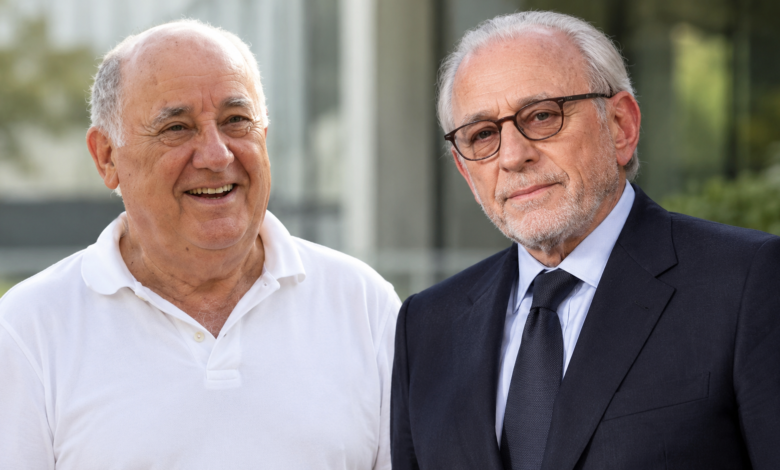
Nelson Peltz and Amancio Ortega are two prominent names in international business, but their careers developed along very different paths. Peltz is an American investor known for shareholder activism, corporate strategy, and his work with major consumer-facing companies. Ortega is a Spanish entrepreneur who founded Zara and helped build Inditex into one of the world’s leading fashion retail groups.
The search term Nelson Peltz and Amancio Ortega raises an interesting question: what connects these two influential business figures? Are they business partners, related to one another, or simply two wealthy entrepreneurs whose names appear together in discussions about global wealth and corporate success?
The distinction matters because a shared appearance in online searches does not establish a personal relationship or professional partnership. Publicly available corporate records and biographies document their separate careers, but they do not establish a significant joint business venture between them.
Understanding their backgrounds provides a clearer picture of why both men attract attention. Peltz built his reputation by investing in established companies and advocating changes intended to improve their performance. Ortega developed a fashion business around accessible clothing, responsive retail operations, and long-term ownership.
This article examines their professional backgrounds, business strategies, sources of influence, investment philosophies, and publicly documented connections. It also explains why their stories are relevant to anyone interested in entrepreneurship, corporate governance, fashion retail, or wealth creation.
Who Is Nelson Peltz?
Nelson Peltz is an American businessman and investor best known as a founding partner and chief executive of Trian Fund Management, an investment management firm established in 2005. His career includes leadership positions in operating businesses and board appointments at several major publicly traded companies.
According to corporate biographies published by Unilever and Sysco, Peltz has accumulated extensive experience in investment management, consumer goods, foodservice, and corporate governance. His career illustrates how an investor can influence a business without necessarily founding or managing it from the beginning.
Early Career and Business Experience
Peltz began his business career in his family’s food distribution business. That early experience introduced him to the practical demands of running a company, including managing operations, serving customers, and making commercial decisions.
He later moved into larger businesses and corporate leadership. One important chapter involved Triangle Industries, where he served as chairman and chief executive. The company became a major packaging business, giving Peltz experience in building and managing operations at a substantial scale.
He subsequently led Triarc Companies, an organization associated with consumer businesses including Arby’s and Snapple. His work with these businesses helped establish his reputation as an executive who could combine acquisitions, operational management, and strategic restructuring.
These experiences are relevant to understanding Peltz’s later investment approach. His professional background extends beyond buying shares in companies. It also includes direct involvement in corporate leadership and decisions about how businesses are organized and operated.
The Creation of Trian Fund Management
Peltz co-founded Trian Fund Management in November 2005 alongside Peter May and Edward Garden.
Trian focuses on investments in established businesses, particularly companies that its investment team believes have opportunities to improve their performance or create additional shareholder value. Its approach can involve discussions with management, engagement with directors, strategic proposals, and participation in corporate governance.
This type of investing is commonly described as activist investing.
An activist investor generally acquires a meaningful financial interest in a company and seeks to influence decisions affecting its direction. The investor might advocate operational improvements, changes in capital allocation, portfolio reviews, or modifications to board composition.
Activist investing is not identical to running a company. Management teams remain responsible for day-to-day operations, while directors oversee governance and major strategic decisions. An activist investor attempts to influence those decisions through ownership rights, negotiations, public campaigns, or board representation.
Peltz’s work with Trian has made him a recognizable figure in debates about corporate accountability and the responsibilities of public-company leadership.
Corporate Board Experience
Peltz has served on the boards of several well-known businesses during his career. These include The Procter & Gamble Company, Mondelez International, Sysco Corporation, H.J. Heinz, and The Wendy’s Company, among others.
His involvement with Procter & Gamble attracted particular attention. The company announced in December 2017 that he would join its board, with his appointment taking effect in March 2018. He served as a director until his term ended in 2021.
He also held a prominent position at Wendy’s, serving as a non-executive chairman for many years. His experience across consumer products, restaurants, and food distribution illustrates the breadth of industries in which he has participated.
His roles have changed over time, so historical appointments should not automatically be interpreted as current positions. Corporate biographies and company filings are the most useful sources for checking the status of individual board memberships.
For Peltz, board service has been an important mechanism for bringing his investment ideas into corporate decision-making.
Who Is Amancio Ortega?
Amancio Ortega is a Spanish entrepreneur best known as the founder of Zara and a central figure in the development of Inditex, the parent group behind Zara and several other fashion retail brands.
Ortega’s career is closely associated with the growth of modern fashion retail. Rather than becoming known primarily as an outside investor, he built his business through clothing production, distribution, retail operations, and ownership of the companies responsible for those activities.
His background demonstrates a different route to business influence: creating a commercial enterprise, expanding its operations, and maintaining a substantial ownership interest as it grows.
From Textile Work to Entrepreneurship
Ortega began working in the textile sector in the early 1960s. According to the Amancio Ortega Foundation and Inditex’s corporate history, he established Confecciones Goa in 1972, a garment-making business that formed an important part of the development of his fashion enterprise.
In 1975, he founded Zara España, the first retail company in what would become the Inditex group.
The opening of Zara represented an important step in connecting clothing production with direct retail sales. Over time, the business developed beyond a single retailer and became part of a much larger international operation.
Ortega’s early career is often discussed in the context of entrepreneurship because it shows how experience within an industry can provide the foundation for creating a company. His knowledge of garment manufacturing and retail helped shape the business that later expanded into international markets.
It is important, however, not to reduce the development of Inditex to the work of one individual alone. Large retail organizations depend on employees, designers, suppliers, logistics teams, store managers, technology, and many other contributors.
Ortega was the founder and a central owner, but the company’s growth also required an extensive organizational structure.
How Zara Helped Transform Fashion Retail
Zara became widely recognized for its approach to fashion retail, particularly its ability to respond to changing consumer preferences.
Traditional fashion models can involve long planning cycles, with collections designed well in advance of their arrival in stores. Zara developed an operating model that emphasized responsiveness, coordination between design and retail teams, and frequent product changes.
The broader concept is often associated with fast fashion, although that label alone does not explain the full complexity of the company’s operations.
Several elements help explain Zara’s business model:
- Customer feedback: Store-level information can help the business understand which products attract attention and which do not.
- Responsive product decisions: Design and merchandising decisions can respond to changing preferences rather than relying exclusively on long-term forecasts.
- Coordinated operations: Production, distribution, and retail activities need to work together to move merchandise efficiently.
- Frequent assortment changes: New products and changing store selections encourage customers to revisit stores and online channels.
- International expansion: A recognizable retail concept can be adapted to markets with different customer preferences and operating requirements.
These elements are not exclusive to Zara, but their integration helped establish the brand’s position in international fashion retail.
The model also creates challenges. Fashion retailers must manage inventory, quality, labor practices, supply-chain transparency, environmental impacts, and the risk of producing merchandise that customers do not buy.
Understanding Zara therefore requires looking beyond sales growth to the operational and social questions that accompany a global clothing business.
Inditex and Long-Term Ownership
Zara operates within Inditex, whose wider brand portfolio has included labels such as Pull&Bear, Massimo Dutti, Bershka, Stradivarius, Oysho, and Zara Home.
Inditex’s scale gives it a broader business structure than a single fashion chain. Different brands serve different customer segments, while group-level capabilities can support areas such as logistics, technology, distribution, and administration.
Ortega served as Inditex’s chairman until 2011 and remained a major shareholder and board member after stepping away from the chairmanship.
His influence is therefore linked not only to Zara’s commercial success but also to his ownership stake in the wider group.
Through Pontegadea and related ownership entities, Ortega has also developed substantial interests outside the fashion business, particularly in property investment. This diversification demonstrates how a founder can use wealth generated by an operating company to build a wider portfolio of assets.
His role should nevertheless be distinguished from the company’s executive leadership. Inditex’s operational management and board leadership have evolved over time, and Ortega’s continuing ownership does not mean he personally directs every day-to-day business decision.
Nelson Peltz and Amancio Ortega: Are They Related or Business Partners?
One of the most important questions behind the search for Nelson Peltz and Amancio Ortega concerns whether the two men have a direct personal or professional connection.
Based on the publicly available corporate biographies, company records, and business histories reviewed for this article, no confirmed family relationship, joint venture, or significant business partnership between them has been established.
Their careers are documented in different business environments. Peltz is associated with Trian Fund Management and corporate investment campaigns, while Ortega is associated with Zara, Inditex, and Pontegadea.
There is no sound basis for presenting them as relatives, collaborators, or partners simply because their names appear together in online searches.
Why Do Their Names Appear Together Online?
There are several reasonable explanations for why people search for both individuals at the same time.
First, both are internationally recognized business figures whose wealth and influence are discussed in financial publications. People researching billionaires often compare individuals from different industries to understand how large fortunes are created.
Second, their careers offer contrasting examples of business ownership. Peltz represents an investment-led approach to influencing existing companies, whereas Ortega represents the founder-led development of a major retail enterprise.
Third, search engines can associate names that appear in similar articles, business directories, wealth rankings, and online discussions. Such associations may generate curiosity without indicating that the individuals have ever worked together.
These possibilities explain the appeal of the comparison, but they should not be confused with verified facts about a relationship.
Has Nelson Peltz Invested in Inditex?
A careful distinction is necessary here. The public information reviewed for this article does not establish a significant investment by Peltz or Trian in Inditex.
That does not justify making an unlimited claim about every possible indirect financial exposure, private transaction, or historical holding. Investment portfolios can change, and not every position is necessarily disclosed publicly.
The responsible conclusion is that no confirmed, material Peltz–Inditex investment relationship has been identified in the sources reviewed. Readers should consult current regulatory filings and official company disclosures if they need to establish whether a particular investment exists.
Nelson Peltz and Amancio Ortega: A Comparison of Business Strategies
Although the two men are not known to share a major business venture, comparing their approaches reveals useful differences in ownership, corporate influence, and long-term value creation.
Peltz’s career has involved acquiring interests in businesses and seeking changes that he believes can improve performance. Ortega’s career has centered on developing a retail business and retaining a substantial ownership interest as the organization expanded.
Neither model guarantees success. Each depends on execution, market conditions, management decisions, and the ability to respond to changing circumstances.
1. Investment Versus Entrepreneurship
Peltz is associated with investment management and activist ownership. His work involves assessing established companies, identifying potential improvements, and using shareholder rights or board representation to influence strategic choices.
Ortega’s business history begins with activity in the textile industry and the creation of companies that developed into Inditex. His influence is rooted in founding a business, expanding its commercial capabilities, and maintaining ownership.
The difference is important for aspiring entrepreneurs and investors. An investor does not necessarily need to create an entirely new product or company to influence its future. A founder, by contrast, often has to build the organization, establish its market position, and develop the systems that make expansion possible.
2. Corporate Governance and Operational Management
Peltz’s career illustrates the relationship between shareholders, directors, and executives.
Shareholders provide capital and hold ownership rights. Boards oversee governance and major strategic matters, while executive teams manage the daily activities of a company. Activist investors may seek changes in any of these areas, depending on the circumstances.
Ortega’s career illustrates another side of the same system: the continuing influence that a founder can exercise through a major ownership position and board participation.
A founder may retain a long-term economic interest even after handing over executive responsibilities. That arrangement can provide continuity, but it also makes clear governance structures important.
The central lesson is that ownership and management are different responsibilities, even when the same individual has played a leading role in building a company.
3. Short-Term Performance and Long-Term Growth
Activist investors frequently examine performance indicators such as profitability, capital allocation, operating costs, and returns to shareholders. Their proposals may involve changes intended to improve results over a defined period.
A retail founder such as Ortega must also consider financial performance, but the business model requires sustained attention to product development, customer preferences, store operations, logistics, and brand positioning.
Neither approach is automatically short-term or long-term. An activist campaign can advocate a durable strategic change, while a founder-led company can make decisions that prioritize immediate results.
The more useful question is whether decisions create sustainable value rather than simply improving a single financial metric.
For a retailer, that means considering customer loyalty, inventory management, product relevance, and operational efficiency alongside revenue and profit. For an investor, it means assessing whether proposed changes are practical and whether their potential benefits justify their costs and risks.
4. Diversification and Risk
Ortega’s wealth is closely associated with his Inditex ownership, but his investment activities through Pontegadea have expanded into property and other assets.
Diversification can reduce dependence on a single business or industry. However, it does not eliminate risk, particularly when a substantial proportion of someone’s wealth remains tied to one company.
Peltz’s investment career is associated with evaluating and investing in multiple businesses. A portfolio can spread exposure across different companies, although concentrated investment positions can still carry considerable risk.
These approaches highlight an important principle: diversification is not simply about owning more assets. It also involves understanding how those assets behave under different economic conditions.
5. Influence and Decision-Making
Peltz’s influence often operates through investment ownership, engagement with boards, and advocacy for corporate change.
Ortega’s influence is associated with founding Inditex, maintaining a major shareholding, and participating in its governance.
Both examples demonstrate that influence can take different forms. It may come from the ability to mobilize shareholders around a proposal, or from the ownership and governance position built through decades of entrepreneurship.
The effectiveness of either approach depends on the quality of decisions, the surrounding market, and the organization’s ability to execute its plans.
Quick Comparison: Nelson Peltz vs. Amancio Ortega
| Category | Nelson Peltz | Amancio Ortega |
|---|---|---|
| Nationality | American | Spanish |
| Primary business association | Trian Fund Management | Inditex and Zara |
| Main professional identity | Investor and corporate strategist | Fashion entrepreneur and major shareholder |
| Established business milestone | Co-founded Trian in 2005 | Founded Zara España in 1975 |
| Main source of business influence | Investment ownership and shareholder engagement | Company founding, ownership, and board participation |
| Key industries | Consumer goods, foodservice, investments, and corporate governance | Fashion retail, clothing, and property investment |
| Notable business activity | Activist investment and corporate board service | Building an international fashion retail group |
| Publicly established partnership between them | No confirmed significant partnership identified | No confirmed significant partnership identified |
This comparison summarizes their documented professional backgrounds rather than suggesting that they share a company or business relationship.
How Their Stories Illustrate Different Paths to Wealth
The comparison between Nelson Peltz and Amancio Ortega is useful because it shows that major business fortunes can emerge from very different activities.
Building Value Through Investment
Peltz’s career demonstrates how investors can seek to create value by examining businesses that already have established products, customers, employees, and infrastructure.
An investor may identify opportunities to improve how a company allocates capital, manages expenses, organizes operations, or competes in its industry. Turning those ideas into results requires careful analysis and cooperation, and sometimes disagreement, with company leadership.
The approach also carries risks. Proposed changes may fail to produce the expected improvements, and pressure to increase shareholder returns can conflict with other business priorities.
For investors studying this model, the important lesson is that purchasing an ownership stake is only one part of the process. Evaluating a company’s economics, governance, competitive position, and execution risks is equally important.
Building Value Through a Retail Business
Ortega’s career illustrates the challenges of creating and scaling an operating company.
A fashion retailer must understand what customers want, develop commercially attractive products, coordinate suppliers, manage inventory, deliver goods, and provide a consistent shopping experience. Expansion introduces further complexity because the company must maintain its identity while operating across different markets.
Zara’s development also demonstrates the importance of coordinating different parts of a business. A retail concept cannot succeed through product design alone. Its performance depends on the systems that connect production, distribution, stores, digital channels, and customer information.
For entrepreneurs, this is a reminder that sustainable growth usually requires more than an attractive idea. It requires an operating model that can deliver the promised value repeatedly.
What Business Readers Can Learn
Several practical lessons emerge from the comparison:
- Understand the business model. Before evaluating a company, identify how it attracts customers, generates revenue, and controls costs.
- Separate ownership from management. A shareholder can influence decisions without being responsible for daily operations.
- Measure performance carefully. Revenue growth alone does not establish profitability or long-term business health.
- Treat diversification as risk management. Different assets may respond differently to economic changes, but diversification cannot remove every risk.
- Avoid assuming that wealth proves a single strategy is universally effective. Business outcomes depend on industry, timing, competition, capital, and execution.
- Distinguish documented facts from online speculation. A comparison between public figures is not evidence of a private relationship.
These lessons are relevant beyond the careers of Peltz and Ortega. They apply to company founders, shareholders, business students, and readers trying to understand how corporate decisions shape economic outcomes.
Amancio Ortega, Inditex, and the Importance of Ownership
Ortega’s role at Inditex provides a useful example of the relationship between a founder and a publicly listed company.
Inditex’s annual reporting identifies Ortega as its founder and a controlling shareholder through ownership entities including Pontegadea Inversiones and Partler Participaciones. The company’s governance arrangements also distinguish his position from that of its executive leadership.
This structure allows Ortega to retain substantial economic influence while the company operates through its own board and management system.
It also helps explain why Ortega’s financial position is closely connected to Inditex. When an individual owns a large share of a publicly traded business, changes in the market value of that company can affect estimates of the individual’s wealth.
However, a shareholder’s net worth is not the same as cash available for immediate spending. Much of a founder’s wealth may be tied to company shares, property, and other investments whose values can change over time.
Pontegadea is relevant to this discussion because it reflects Ortega’s activity beyond fashion retail. Property investments can provide another source of income and broaden an investment portfolio, although real estate has its own risks, including changes in financing costs, rental demand, property valuations, and market liquidity.
For anyone researching Ortega’s finances, it is useful to distinguish between the operating performance of Inditex, the value of his shareholding, and the results of his separate investment activities.
Nelson Peltz, Trian, and the Role of Shareholder Activism
Peltz’s career offers a complementary example of how corporate ownership can be used to influence business strategy.
Trian describes its investment approach as involving concentrated public-equity ownership, operational experience, and engagement with company management and boards. Its stated objective is to encourage strategic and operational initiatives that can support long-term earnings growth.
In practice, activist investing can involve detailed examination of a company’s business units, cost structure, capital spending, governance, and competitive performance.
An investor may believe that management is overlooking opportunities or that the company would benefit from a different strategy. The investor can then attempt to persuade directors and fellow shareholders to support the proposed changes.
There are competing perspectives on this approach. Supporters argue that activist investors can challenge complacency, strengthen accountability, and encourage better capital allocation. Critics may question whether particular campaigns give sufficient weight to employees, customers, research spending, or long-term investment.
The outcome depends on the company and the specific proposals involved. Activist ownership should therefore be evaluated through evidence about individual campaigns rather than treated as inherently beneficial or harmful.
Peltz’s career is an example of how investment expertise and corporate governance can intersect. It does not establish that he follows the same strategy as Ortega or that the two share a business agenda.
What About Their Net Worth?
Net worth is another reason readers may compare Nelson Peltz and Amancio Ortega. Both are associated with substantial business wealth, but reliable comparisons require care.
Wealth estimates from financial publications are not identical to audited personal financial statements. They may use different valuation methods, assumptions about private assets, exchange rates, share prices, and estimates of liabilities.
For Ortega, a substantial part of his publicly understood wealth is connected with his ownership of Inditex and his broader investment holdings.
For Peltz, estimates may depend on the value of investment interests, private holdings, and other assets. Those calculations can be difficult to compare directly with the wealth of a founder whose ownership of a listed company is more visible.
Three points are worth remembering:
- Net worth changes. Public share prices and property valuations fluctuate, so an estimate from an earlier year may no longer be accurate.
- Ownership is not the same as income. A large shareholding does not mean that its entire value is available as cash.
- Different estimates use different methods. Comparisons should identify the source and date rather than combine figures from unrelated publications.
Without a consistent, current source and methodology for both individuals, publishing exact figures can create a misleading impression of precision. This article therefore focuses on their documented business backgrounds instead of presenting potentially inconsistent net worth estimates as definitive facts.
Frequently Asked Questions About Nelson Peltz and Amancio Ortega
1. Are Nelson Peltz and Amancio Ortega related?
No confirmed family relationship between Nelson Peltz and Amancio Ortega has been established in the reliable public sources reviewed for this article. Their documented biographies describe separate careers in American investment management and Spanish fashion retail.
2. Are Nelson Peltz and Amancio Ortega business partners?
No significant direct business partnership between the two has been verified in the sources reviewed. Peltz is associated with Trian Fund Management, while Ortega is associated with Inditex, Zara, and Pontegadea. Their shared prominence in business discussions does not establish a joint venture.
3. Who is Nelson Peltz?
Nelson Peltz is an American investor and founding partner of Trian Fund Management. He is known for activist investing, corporate strategy, and board service at major companies, including Procter & Gamble and Wendy’s. His career has included both investment management and direct corporate leadership.
4. Who is Amancio Ortega?
Amancio Ortega is a Spanish entrepreneur who founded Zara in 1975 and helped establish Inditex as a major international fashion retailer. He remains a significant shareholder and board member of Inditex, with additional investment interests through Pontegadea.
5. Did Nelson Peltz invest in Zara?
The sources reviewed do not establish a confirmed, significant investment by Peltz or Trian in Zara’s parent company, Inditex. Claims about a direct investment should be supported by relevant ownership disclosures or regulatory filings rather than assumptions based on the two men’s business prominence.
6. How did Amancio Ortega build his wealth?
Ortega built his business career through the textile industry and the development of Zara and Inditex. His substantial ownership interest in Inditex has been an important source of his wealth, while his investment activities through Pontegadea have expanded his interests into property and other assets.
7. What is Nelson Peltz best known for?
Peltz is best known for activist investing through Trian Fund Management. His approach involves taking positions in established companies and seeking strategic or operational changes through engagement with management teams, boards, and shareholders.
8. What is the main difference between Nelson Peltz and Amancio Ortega?
The principal difference is how they built their business influence. Peltz became known for investing in established companies and advocating changes in their direction. Ortega founded a fashion retail business and retained a substantial ownership position as it expanded internationally.
9. Is Amancio Ortega still involved with Inditex?
Yes. Inditex’s 2025 annual corporate governance reporting identifies Ortega as a member of its board and controlling shareholder. The company has separate executive leadership, and Marta Ortega serves as its non-executive chairperson. These roles distinguish Ortega’s continuing ownership and board participation from day-to-day executive management.
10. Why do people compare Nelson Peltz and Amancio Ortega?
People may compare them because both are prominent business figures whose careers are discussed in relation to wealth, ownership, and corporate influence. Their different approaches also provide an interesting way to examine activist investing alongside founder-led entrepreneurship. However, the comparison does not establish a personal connection or business partnership.
Conclusion
Nelson Peltz and Amancio Ortega represent two distinct approaches to building business influence. Peltz established his reputation through investment management, corporate leadership, and shareholder activism. Ortega built Zara and helped develop Inditex into an international fashion retail group while maintaining a substantial ownership interest.
The most important finding is that no confirmed significant personal or business relationship between Nelson Peltz and Amancio Ortega has been established in the public sources reviewed. Their names can be discussed together because both have played important roles in global business, but that comparison should not be mistaken for evidence that they are relatives, collaborators, or business partners.
Their careers also offer useful lessons. Peltz’s work highlights the role of ownership, corporate governance, and strategic change in established companies. Ortega’s experience demonstrates the importance of product relevance, coordinated operations, retail execution, and long-term business ownership.
For readers interested in entrepreneurship and investment, the broader lesson is that successful businesses can be built in different ways. Some people create value by founding and expanding an operating company; others seek to influence the performance of companies through investment and governance. Both approaches require informed decisions, disciplined execution, and an understanding of risk.
Ultimately, the comparison between Nelson Peltz and Amancio Ortega is most useful when it focuses on their documented careers and business strategies. Separating verified information from online speculation helps readers understand both figures more accurately and makes the discussion more informative.
YOU MAY ALSO READ







One Comment